
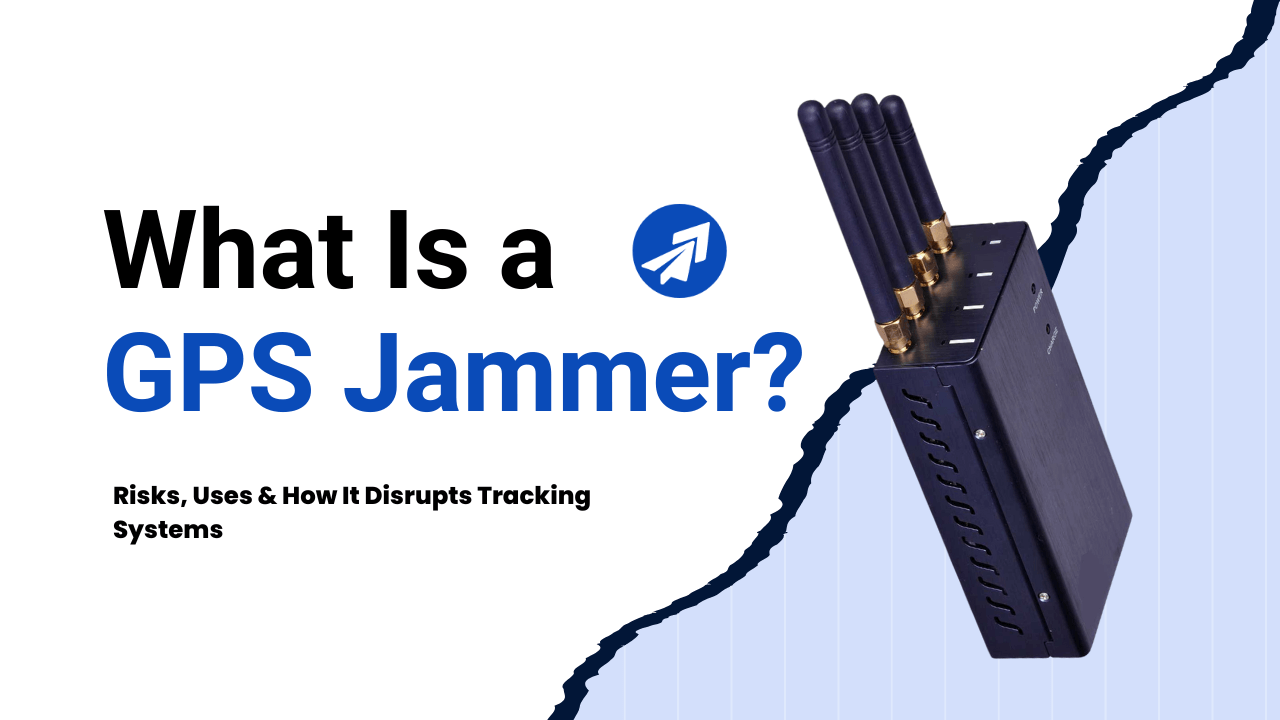
A GPS jammer is a device that blocks or scrambles GPS signals, making trackers unable to find their true location. In plain terms, it’s like someone shouting over a quiet conversation – the GPS “conversations” from the satellites get drowned out. In one sentence: a GPS jammer is a gadget that transmits noise on the same frequency as GPS satellites, so your tracker hears only static and can’t determine where it is. GPS signals from space are very weak by the time they reach Earth, so even a tiny jammer can overwhelm them. This quiet threat is on the rise and even commercial fleets can fall victim. Your fleet might be at risk—and you may not even know it.
In practical terms, a GPS jammer is often a small, battery-powered box that someone can hide in a vehicle. When turned on, it floods the airwaves and masks the satellite signals that your GPS receiver needs. Think of it like someone speaking into your phone during a call – you suddenly hear nothing but static. Likewise, the jammer “covers up” the real satellite signals. The hardware shown above (military-grade jammers) illustrates how these devices work: they override the satellite frequencies so that the GPS device becomes “blind”.
Where Are GPS Jammers Used (and Abused)?
GPS jammers turn up wherever someone wants to hide a vehicle or its route. Common abuses include:
Theft and smuggling: Thieves use jammers to hide stolen cars or trucks from tracking devices. Smugglers do the same to keep authorities from following illicit cargo. In fact, experts report criminals put jammers on cars to cover carjackings or bypass tolls.
Dishonest drivers: Some drivers jam their own company vehicles to take unauthorized breaks or detours without the boss knowing. For example, truckers in London have been caught jamming GPS to avoid truck-stop rules.
Privacy concerns: A few privacy-minded individuals use jammers to avoid being tracked by apps or governments. (Although protecting privacy sounds innocent, jamming GPS is still illegal and can hurt innocent bystanders.)
Mileage fraud: Jammers let people cheat mileage reports on rental cars or delivery vans, since the device can’t record real distance traveled.
Corporate espionage: Rarely, a company might illegally jam a competitor’s fleet to disrupt their logistics.
While some uses are intentional (by thieves or cheats), many businesses suffer jamming unknowingly. A criminal can quietly park near a parked delivery truck and jam its GPS for minutes, causing confusion without ever being seen. In short, if GPS signals suddenly drop for a vehicle, it might not just be bad equipment – it could be sabotage.
How GPS Jammers Disrupt Tracking Systems
When a jammer strikes, your tracking dashboard usually just goes blank or wrong. Common symptoms include:
- Device “offline”: The tracker suddenly stops reporting positions, and the management system shows it as offline or out-of-coverage.
- Frozen location: The map might show the vehicle parked in place (usually where the jammer was active) for longer than reality.
- Signal loss: GPS signal strength readings fall to zero, even though the vehicle is moving.
- Erratic updates: GPS fixes stop, then suddenly jump when the jammer is moved.
These problems often look like device failure. But security experts say a clue is that multiple trackers in the same area lose signal at once. For example, the U.S. Cybersecurity agency (CISA) notes that if a receiver that normally has a good GPS lock suddenly goes dark, interference (like jamming) is likely. And if several vehicles go offline together, that’s a strong sign someone is jamming the area. Too often, fleet managers blame the tracker or network rather than investigating a jammer.
In practice, jamming leaves behind tell-tale logs. If your system records sudden signal drop-offs and no obvious device fault, it’s time to suspect a jammer. (By contrast, a dead battery or hardware crash usually affects just one device.) In short, a jammer makes the tracking system think the vehicle stopped broadcasting, when really it’s the GPS that got blocked. Businesses should heed these clues – one day it might be the difference between solving a delivery delay and missing a stolen vehicle entirely.
0 Comments
No comments yet. Be the first to comment!
Please to post a comment