
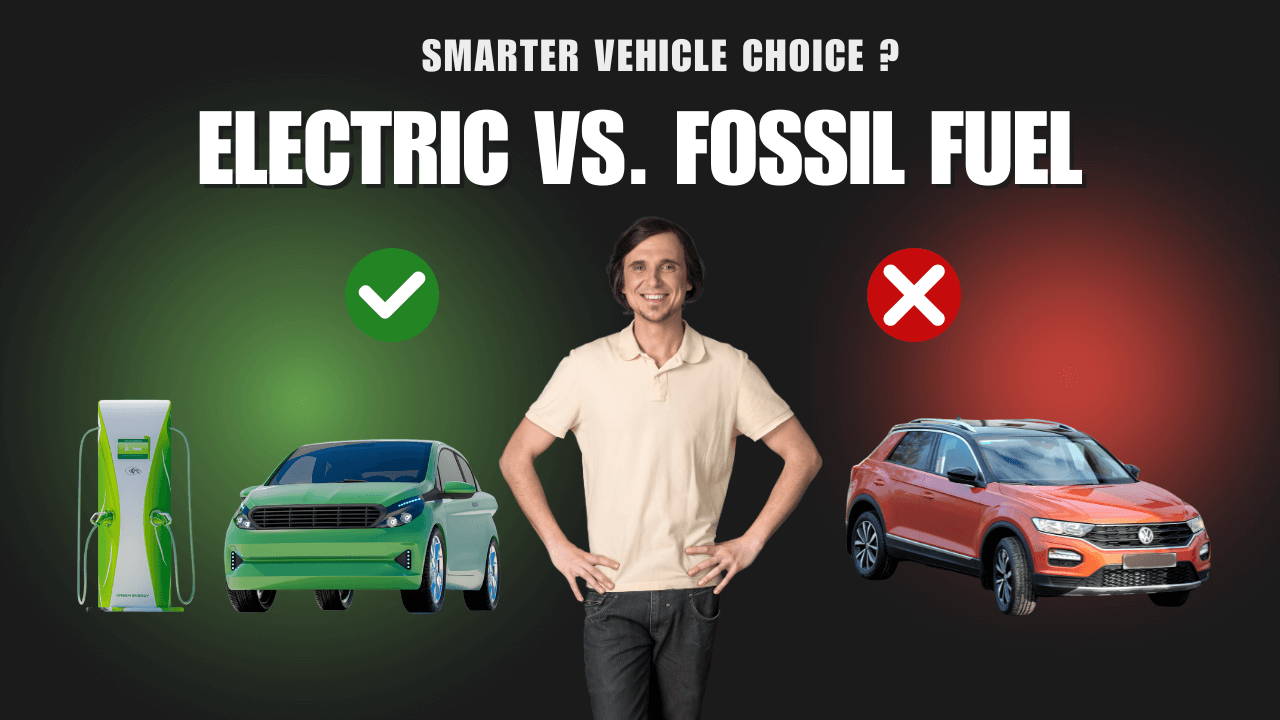
Fuel prices are unpredictable and climate concerns are urgent. Today’s businesses face soaring petrol and diesel costs, shrinking margins, and growing pressure to reduce carbon emissions. As one expert puts it, “electric vehicles remain on a strong growth trajectory globally” – with EV sales on pace to hit 20 million units (over 25% of new car sales) in 2026. In this shifting landscape, fleet operators and transport companies need to switch gears. This article breaks down why Electric Vehicles (EVs) now outperform internal-combustion fleets on cost, efficiency, and sustainability – and how FleetStack™ EV tracking software helps you manage that transition effectively.
Cost Comparison: EVs vs. Fossil Fuel Vehicles
Lower fuel costs:
Electricity is far cheaper per mile than gasoline or diesel. A US government analysis notes that EVs “are less expensive to operate…because electricity is cheaper than gasoline per mile of travel”. In practice, fleets often see 2–4× lower “fuel” bills per mile with EVs versus trucks. For example, charging a delivery van overnight can cost only a few dollars per fill, while diesel might cost 3–4× more for the same range.
Reduced maintenance:
EVs have far fewer moving parts (no oil changes, simple motors, regenerative braking). Consumer Reports found BEV drivers spend half as much on maintenance and repairs as ICE drivers. In concrete terms, typical EV owners save $6,000–$10,000 over the vehicle’s life compared to a similar gas car. For fleets, this means less downtime and fewer shops visits. One survey showed EV maintenance costs ~50% below gas cars – trucks and vans only need routine tire and brake checks.
Tax credits & incentives:
Governments worldwide sweeten the economics. In the US, businesses buying new EVs can claim federal credits (up to $7,500 per new EV and $4,000 per used EV) and even up to $40,000 per vehicle under the Commercial Clean Vehicle Credit. Many states and cities add more subsidies, free charging, or parking perks. These incentives slash upfront costs and shorten payback periods. As one analysis notes, even without incentives EV fleets have 9% lower total cost of ownership (TCO) than equivalent ICE fleets – and the gap widens when credits and cheaper charging are included .
Real-world example: A typical delivery van running 20,000 miles/year might burn $6,000 of diesel fuel annually at $4/gal. An EV van (~3.5 miles/kWh) might only use ~$1,500 of electricity (at $0.13/kWh) – saving $4,500 per year. Coupled with ~$300 vs. $1,000 yearly maintenance, and generous tax credits, EV fleets can recoup higher purchase costs in just a few years. (See CleanTechnica and RMI studies for detailed TCO comparisons. )
Environmental Impact
Figure: Transport emits ~24% of global CO₂, with road vehicles (cars & trucks) responsible for roughly 15% of total CO₂. EVs cut this pollution to zero at the tailpipe.
Road transport is a major source of pollution – roughly 20% of global CO₂ emissions, with cars and trucks accounting for about 75% of that (≈15% of all emissions). Fossil-fueled fleets belch CO₂, nitrogen oxides, and fine particulates into our cities. EVs, by contrast, produce zero tailpipe emissions: they eliminate 100% of local carbon and cut NOₓ emissions by ~90%. Cleaner vehicles mean fewer asthma cases, smog alerts, and climate-warming gases.
Cities and regulators are moving fast: many countries plan to ban new petrol/diesel car sales by the 2030s (the EU has locked in a 2035 ICE ban). Globally, “electric cars remain on a strong growth trajectory” – the IEA projects EVs will hit 40%+ market share by 2030 as prices fall. Governments tightening emissions rules (and potential future carbon taxes) make fossil fuel fleets even more expensive and risky. Switching to EVs helps businesses future-proof against these policies while aligning with corporate sustainability goals.
Business Benefits: Why Fleets Are Going Electric
1. Lower Total Cost of Ownership (TCO):
As noted, EVs already beat fossil vehicles on lifetime costs. A recent RMI/Atlas analysis found EVs have about 9% lower TCO even before counting all incentives. That advantage grows over time as batteries last longer and fuel prices stay volatile. Fleets save on fuel, maintenance, and even insurance (sometimes insurers favor EVs due to lower accident/damage rates). Over a 5–7 year ownership, those savings add up to tens of thousands per vehicle.
2. Generous Incentives:
Beyond federal credits (up to $7.5k per new EV), many local programs fund charging infrastructure, rebate fleet purchases, or offer HOV lane access. The IRS even offers up to $40,000 clean-vehicle credit for qualifying commercial EVs. In Europe and Asia, purchase grants and tax breaks often exist too. These policies mean a faster ROI for an electric fleet.
3. Corporate ESG & Branding:
Customers, investors, and governments increasingly value sustainability. Switching your fleet to EVs directly cuts your company’s carbon footprint, helping meet ESG targets and earning “green” credentials. A clean fleet can improve brand image and even unlock new business (e.g. contracts requiring low emissions). For example, logistics companies often win or retain contracts by demonstrating eco-friendly operations.
4. Improved Operations & Reliability:
EVs have simpler drivetrains and software-managed fleets benefit from predictive maintenance. Fewer breakdowns and longer service intervals translate to higher uptime. Plus, with on-board data and connectivity, managers can monitor battery health and energy use (see below) – proactively scheduling service only when needed.
In short, electric trucks and vans drive business value, not just emission savings. As one industry report notes, even after counting charger costs, “EVs are an even more cost-effective choice” for fleets.
Technology & Innovation
EVs aren’t the clunky cars of the past – they’re rapidly improving:
✅ Longer range: The median range of 2026 EV models is now about 283 miles per charge (≈455 km). In other words, half of EVs on the road can travel nearly as far on a single charge as a full tank in a typical gas car. Premium EVs exceed 500 miles (Lucid Air: 520 mi). Range anxiety is fading: most fleet routes (city deliveries, service calls, short hauls) are well within these limits.
✅ Rapid charging: The public and private charging network is expanding explosively. In 2026 alone, 1.3 million new public chargers were installed worldwide (a 30% jump). Global public charging points doubled since 2026 to over 5 million. Ultra-fast chargers (150–350 kW) can add 150–200 miles in 15–30 minutes for modern EVs. For fleets, growing home/yard chargers and networks of fast depot chargers mean less time lost fueling.
✅ Smart features: EVs come with the latest tech – sophisticated telematics, digital dashboards, and built-in connectivity. Advanced driver-assist and over-the-air software updates ensure safety and efficiency. Combined with dedicated EV fleet management software, businesses can optimize driving behavior, plan charging around peak rates, and track energy use in real time.
EV adoption trends (2026): Even amid economic headwinds, EV sales continue setting records. Global electric car sales surpassed 17 million in 2026 (20%+ market share) and were up 35% in early 2026. China leads (nearly 50% EV share), but Europe and Latin America are surging too. Every continent is seeing EV lineup expansions from major automakers. This growing scale drives battery costs and EV sticker prices down, accelerating the transition.
Fleet Stack™: The Perfect GPS Solution for EVs
Fleet Stack™ EV Tracking Software is purpose-built to help you monitor, optimize and scale your electric fleet. Here’s how it stands out:
✅ Real-time Battery Monitoring: Fleet Stack integrates with EV telematics to give live data on each vehicle’s state of charge, battery health, and energy consumption. You and your drivers see when and how fast to charge, and fleet managers get alerts if a battery is running low or underperforming. This prevents unexpected dead batteries on the road.
✅ Charging Station Alerts & Trip Optimization: The platform’s intelligent routing considers current battery levels and charger locations. If a route exceeds one charge, Fleet Stack automatically suggests convenient charging stops (with real-time availability), minimizing detours. You can also set up geofences around approved charging hubs to avoid unauthorized use. This range-aware dispatch means fewer delays and smarter trips.
✅ Smart Dispatch & Low Idle Time: EVs save energy by limiting idling. Fleet Stack identifies idle vehicles and coaches drivers to turn off trucks during stops. It also automates EV-friendly route planning – for example, avoiding unnecessary stops or hills that drain batteries. Result: more time on the road, less wasted charge.
✅ Self-Hosted, No Subscription: Unlike cloud-only systems, Fleet Stack installs on your own server or cloud – giving you full data control and privacy. There are no monthly fees or per-vehicle charges. It’s a one-time purchase that pays for itself.
✅ All-Device Compatibility: Fleet Stack works with any GPS tracking device or modern EV telematics module. Whether your trucks come with built-in trackers or aftermarket units, Fleet Stack will sync seamlessly. It’s also global-ready: you can deploy it in any country or region.
✅ Quick & Easy Setup: No coding or IT team needed. Fleet Stack offers one-touch installation – just download and install, and your system is live within minutes. It’s designed to be user-friendly for managers with no technical background. (Their motto: “We Make It Easiest – Just Deploy!”)
Fleet Stack™ is the #1 platform for EV fleet management. We combine cutting-edge EV support with enterprise-grade security and control. From dashboards showing your total fleet’s state of charge, to automated reports on energy use and CO₂ savings, Fleet Stack gives you full visibility. It’s truly EV-ready GPS tracking software, empowering businesses to manage electric vehicles as easily as their legacy trucks.
Delivering Savings with Fleet Stack
Consider GreenLine Delivery, a medium-sized courier in Europe. In 2026 they began transitioning 100 vans to electric models. They installed Fleet Stack™ to manage this new EV fleet. Within a year, GreenLine reported 38% reduction in fuel costs and maintenance downtime. Drivers used Fleet Stack’s routing alerts to charge only when needed, eliminating emergency recharges. The company even identified unused vans and optimized routes, further cutting costs. By combining EVs with smart tracking, GreenLine saved hundreds of thousands of dollars in one year, all while branding itself as an eco-friendly business. (This is a representative example – many fleets worldwide see similar gains with EVs and intelligent software.)
Ready to future-proof your fleet?
The shift to electric is accelerating in 2026. Fleet Stack™ helps you make that transition smoothly, unlocking the full benefits of EVs. With our EV tracking software, your fleet will save money, run cleaner, and stay on schedule.
Schedule a free demo of Fleet Stack EV tracking software today. See how easy it is to Deploy, Track, and Optimize your electric vehicles. Just Deploy™ – Fleet Stack.
1 Comment
Kamal
15 JUN 2026, 02:41 AM
Great
Please to post a comment