
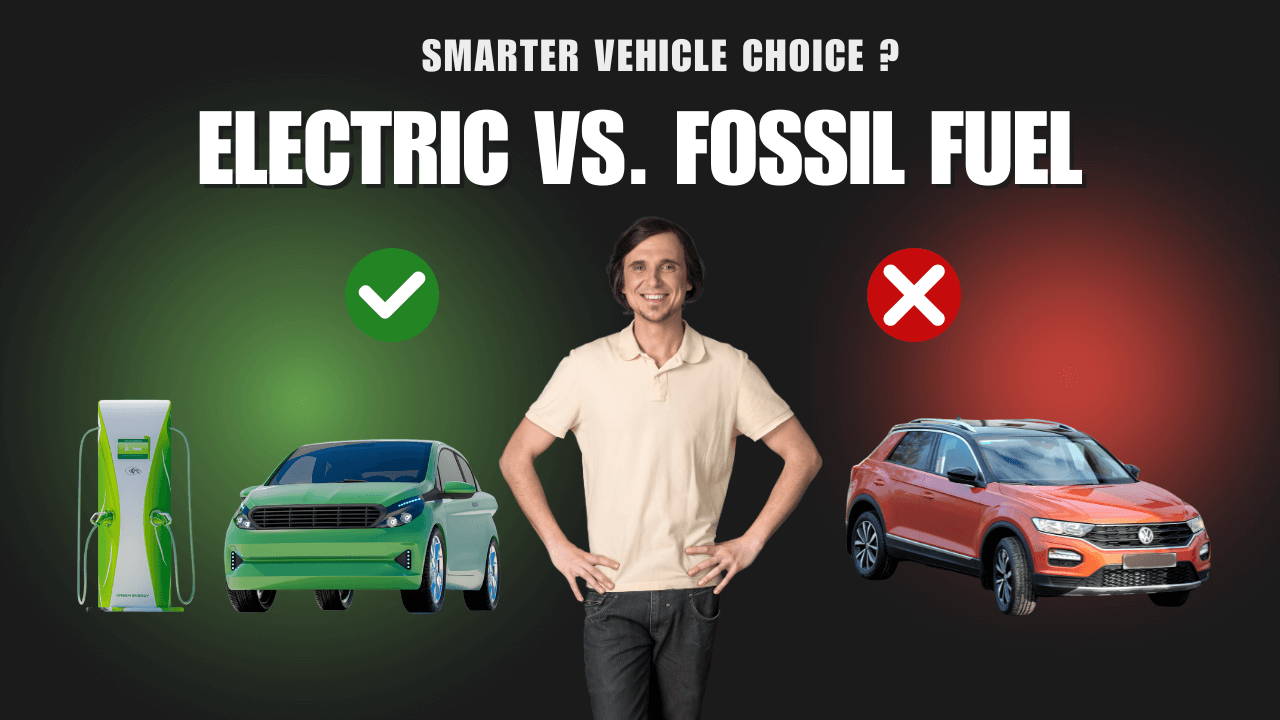
EVs will be a better investment than fossil fuels in 2026 because they can be cheaper to operate.
The main concept is to use electric vehicles as the mode of moving around in the communities instead of fossil fuel vehicles.
The transportation sector is at the heart of a major change that is unparalleled in decades. The rise in fuel prices, laws and regulations regarding emissions, extra maintenance fees and the need for sustainable transport have made companies think of reimagining their vehicle fleets.
The issue for many companies today is not just about the benefits of electric vehicles (EVs) to the environment, but also about how they can do more. But the key question is: does it make more sense from a business perspective than a petrol and diesel car?
This question is becoming easier to answer in 2026.
Lower energy costs, reduced maintenance, increased operational efficiencies, advanced connectivity, and importantly reduced tailpipe emissions are all benefits EVs can bring to the table. With the addition of today's GPS tracking and fleet management software, EVs can be even more efficient and easier to manage.
Even though EV sales are down from their peak, the adoption is still rising all over the world, and EVs are still becoming more popular as new vehicle sales. The technology of batteries, charging stations, driving range and the availability of vehicles are also progressing and making EVs usable in other commercial vehicles like delivery fleets, company cars, taxis, service and logistics vehicles.
The key distinction between electric vehicles and fossil fuel vehicles, the financial and environmental benefits of EV adoption, the challenges companies must consider, and how Fleet Stack™ EV tracking software can help companies manage an electric fleet more effectively will all be addressed in this guide.
How is an electric vehicle different than a fossil fuel vehicle?
It is useful to know how both the technologies work before comparing costs and performance.
Traditionally, fossil fuel vehicles are powered by an internal combustion engine (ICE). A combustion process using petrol/diesel takes place in the inside of the engine to produce mechanical energy. It is a process with hundreds of moving parts, and generates exhaust gases which have to be discharged via the exhaust system of the vehicle.
An electric vehicle is a vehicle that is powered by one or more electric motors with a rechargeable battery pack that supplies electricity to run the vehicle. The electricity from the battery is transformed to mechanical power by the motor.
The main differences are:
| Feature | Electric Vehicle | Petrol/Diesel Vehicle |
| Energy source | Electricity | Petrol or diesel |
| Powertrain | Electric motor | Internal combustion engine |
| Tailpipe emissions | Zero | Yes |
| Oil changes | Not required | Required |
| Regenerative braking | Yes | Usually no |
| Moving drivetrain parts | Fewer | Many |
| Energy efficiency | Generally much higher | Lower |
| Refueling/recharging | Charging station | Fuel station |
| Connectivity and remote monitoring | Very Connected | Depends on telematics |
| Maintenance | Generally lower | Generally higher |
| Software integration | Extensive | Increasing |
This factor is especially important for companies that use vehicles on a daily basis. The distance a private car covers in a week is just a few hundred kilometers while a delivery van, taxi, service vehicle or logistics truck can cover thousands of kilometers in a day.
These energy and maintenance expenses may be a few dollars per mile, but over the years, they can be significant for a commercial vehicle with a high mileage.
The Cost of an EV vs. a fossil fuel vehicle is not as complex as it is thought to be.
If the question for most fleet operators is as simple as this, then it is time to move on.
Which car would have lower running costs over the car's life?
This will vary based on the type of vehicle, electric vehicle costs, gas costs, annual miles, charging stations, financing, maintenance expenses, and local incentives. There are however, significant operating cost advantages to EVs.
1. Reduce Fuel and Energy Costs
The one of the major benefits of an Electric vehicle is its cost of energy.
Electric motors are a lot more efficient at transforming stored energy into motion than an internal combustion engine. Electric drivetrains can convert a far greater percentage of stored energy into the movement of a vehicle than do conventional engines that generate a significant amount of energy as heat.
This is a huge opportunity to save on the expenses of fleet operations.
Let's say the delivery truck's annual mileage is approximately 20,000 miles.
Consuming about 2,000 gallons of fuel, depending on the efficiency and use of the diesel car. This is approximately $8000 per year in gasoline expenses at $4 per gallon.
Around 5,700 kWh is needed to drive the same distance as an electric vehicle that uses approximately 3.5 miles per kWh. The cost of electricity would be about $740 with an electric rate of $0.13/kWh.
The real costs are dependent on the type of vehicles, efficiency, charging losses, fuel costs, driving conditions and charging location, as well as electricity charges. However the example is representative of the drivers that high mileage fleets are particularly interested in electrification for.
If a business can be able to charge vehicles on-site at their workplace or depot then they could also gain further energy cost reductions as they may be charged at a lower energy price.
There are numerous advantages to fleet energy tracking.
Making a switch to EVs does not ensure maximum savings.
When employing this new tool, fleet managers need to understand that:
- Energy used per car
- kWh per distance (km/mile) or per load (kwh/load):
- Charging frequency
- Charging duration
- The battery is charged.
- Driver behavior
- Route efficiency
- Idle time
- Regenerative braking performance
- The seasonal variation of energy use.
This is where EV telematics and fleet management software can come in handy.
2. Decrease EV Maintenance Costs
There are less mechanical parts in electric vehicles than in conventional vehicles.
The number of parts in a traditional vehicle with an internal combustion engine that need frequent maintenance include:
- Engine oil
- Oil filters
- Spark plugs
- Fuel injectors
- Exhaust systems
- Transmission components
- Belts
- Engine cooling components
- Multiple engine-related sensors
Many of these factors can be eliminated with EVs.
The majority of electric vehicles do not require any changes after a couple of thousand miles or spark plugs or exhaust system servicing. The electric motor can also be used to decelerate the vehicle which can extend the life of the conventional braking mechanism.
EVs still require:
- Tire replacement
- Brake inspection
- Suspension maintenance
- Steering-system maintenance
- Cooling-system checks
- Battery-system monitoring
- Software updates
- General inspections
With fewer mechanical components, however, there are fewer potential failure points.
This can result in reduced workshop visits and downtime for the vehicle in a commercial fleet.
Money is lost when the machine is down.
The delivery truck in the workshop does not deliver packages. Without a taxi there is no revenue. Appointments with customers may be postponed if the service truck is not out on the road.
So vehicle uptime needs to be taken into account with fuel and maintenance costs in calculating TCO.
3. The LCC of an EV can be Favorable.
In some instances, the price of the EV is higher than the petrol or diesel equivalent.
One of the reasons why businesses should not only compare the initial purchase price of the vehicles.
Rather, fleet operators should determine the Total Cost of Ownership (TCO).
TCO can include:
- Expenses of buying or leasing.
- Financing
- Fuel or electricity
- Maintenance
- Repairs
- Tires
- Insurance
- Charging infrastructure
- Depreciation
- Taxes and incentives
- Downtime
- Resale value
An EV, that has significantly lower energy and maintenance costs, but higher initial cost, can have potentially lower costs over its useful life.
This can have a huge impact in a high mileage fleet application.
4. Government Incentives and EV Policies
Governments throughout the world are encouraging vehicle electrification by the use of various mixes of:
- Purchase incentives
- Tax credits
- Registration benefits
- Charging infrastructure subsidies
- Reduced road taxes
- Corporate incentives
- Low-emission-zone access
- Parking benefits
Depending on the vehicle, the incentives may vary by state and country, and are frequently updated, depending on the type of incentive.
Businesses should thus review existing local programs prior to the purchase of EVs.
For example, the norms governing EVs may vary from central government to state government in India and incentives or taxation of commercial vehicles may differ from that of private vehicles.
The overall picture is evident: Governments are promoting cleaner transportation and charging up investment in charging infrastructure.
These policies can make a huge difference for fleet operators when it comes to the bottom line of electrification.
Environmental impact: EVs vs. Fossil Fuel Vehicles
The EV side of the argument is only one and it's the price.
Transportation is a significant source of GHGs globally and road transportation is a significant source of urban air pollution.
Petrol and diesel vehicle exhaust gases include gases such as carbon dioxide, nitrogen oxides, particulates and others.
EVs are a vehicle that does not emit any tailpipe pollutants.
This is especially relevant in urban areas where there exists a large number of commercial vehicles operating on the road every day.
Cleaner Urban Transportation
Urban motorized vehicles like delivery vans, taxis, buses, service vehicles and other commercial vehicles may be in service for many hours.
There will be a reduction in local tailpipe pollution if the vehicles are replaced with EVs rather than fossil fuel vehicles.
Cleaner transportation can help to achieve:
- Improved air quality in cities.
- Reduced air pollution in the area through reduced exhaust.
- Lower noise levels
- The fear of running out of petroleum resources has been reduced.
- Lower the carbon footprint of clean electricity charging by reducing CO2 emissions.
There are a number of points to note about EVs: They don't produce any emissions when they are on the road. There is an environmental impact associated with the manufacture of batteries, generation of electricity, raw materials, and vehicle manufacturing.
However, the life cycle emissions of similar fossil fuel vehicles can be considerably lower as the electricity grid gets cleaner.
EVs do not produce a great deal of noise like traditional vehicles.
Another very common benefit that isn't mentioned is noise.
Compared to internal combustion engines, electric motors operate much quieter especially at low speeds.
This could be helpful for enterprise that's running:
- Delivery vans
- Airport vehicles
- Hotel transportation
- Campus fleets
- Municipal vehicles
- Residential-area services
- Night-time delivery operations
Reducing road noise can enhance the driving, customer, pedestrian and neighbour experience.
Cities that want to reduce air and noise pollution will also benefit from the adoption of EVs, other than the reduction in carbon dioxide.
The reasons behind the transition to electric products for business.
These benefits of EVs are even more significant from a fleet-management point of view.
1. Lower Operating Costs
Fuel and maintenance are a huge cost to fleet operators.
Even a small savings in per-vehicle operating cost adds up to considerable annual saving when hundreds of vehicles are in operation.
For instance, if an EV costs $2,000 less than a traditional car a year and a business is running 100 cars, this is about:
The potential annual operating savings have been estimated at $200,000.
The savings will depend on the amount of usage of the vehicles and the local price of energy, but the concept remains the same.
The more a vehicle drives, the more efficient operation it will be.
2. Better Vehicle Uptime
A few mechanical parts can help to decrease the number of maintenance tasks.
One of the main metrics for fleet managers is uptime.
Today's fleet management software can assist fleet managers in deciding what vehicles require maintenance before a minor issue becomes a major issue.
EV telematics can deliver extra data on various aspects of:
- Battery condition
- State of charge
- Energy consumption
- Charging activity
- Vehicle location
- Driving behavior
- Route efficiency
- Fault conditions
This allows the maintenance teams to make decisions on the operational data and not on maintenance schedules that are pre-determined.
3. Improve driver & route management.
New considerations should be taken into account when planning an EV fleet.
A fine diesel van service may not be the most efficient for an EV.
When considering how to approach the issue, fleet managers should consider:
- Starting battery level
- Distance
- Traffic
- Terrain
- Weather
- Payload
- Charging availability
- Expected energy consumption
- Driver behavior
With a smart fleet management system, the location data and battery data can assist the dispatcher in making decisions.
The system can indicate to the fleet manager that the EV is getting into a problematic state even before it reaches a critical point, for example when starting a long delivery route with low SOC.
This is better than when the car is already stuck, you'll find out the issue.
4. Corporate sustainability and ESG
Sustainability is quickly emerging as a business priority.
Large organizations, government and enterprise customers can consider suppliers based on their environmental performance.
In terms of the business, an electric fleet can be a means of taking tangible steps toward sustainability goals.
Here are some of the parameters that businesses can keep an eye on:
- Estimated CO₂ reduction
- Fuel consumption avoided
- Electric energy consumption
- EV utilization
- Vehicle efficiency
- Sustainable mileage
- Fleet electrification percentage
These metrics could be used on internal reports, sustainability plans, or with customers.
A company that can show a definite return on investment for fuel costs and emissions reduction can tell a more positive sustainability story than a company simply claiming to be “green.”
5. Improved Brand Image
Businesses are subject to more and more scrutiny from customers.
Electric delivery vehicle companies can carry a concrete message about sustainability.
This can prove to be beneficial for:
- E-commerce companies
- Logistics providers
- Food delivery businesses
- Corporate transportation
- Hotels
- Real estate companies
- Service companies
- Municipal fleets
For an EV fleet, then, operating and marketing benefits are possible.
The technology of EVs is advancing at a quick pace.
EV technology has progressed significantly over the years.
The modern EVs have been enhanced in several ways.
Longer Driving Range
Early electric vehicles were sometimes mockingly called “electric buggies”.
Today, EVs have tons bigger batteries, and efficiency a lot more powerful.
Urban fleets can easily take advantage of today's EVs to satisfy their daily requirements.
If you are looking at commercial vehicles, an important consideration is not:
How many miles will the car travel on a single charge of its battery?
Instead, ask:
Is it possible for the vehicle to travel its usual route at least once a day without disruption?
The answer is yes for many applications that are based on cities and fleets.
Faster EV Charging
Technology for charging is improving as well.
Depending on the vehicle and charger, the modern DC fast charging system can fill up the battery in a relatively short amount of time at a very high percentage of the battery.
There are various charging approaches that fleet operators can take:
Overnight Depot Charging
The vehicles are recharged at the end of day and at night time, return to the depot.
A simpler route is ideal for this!
Opportunity Charging
A fee is charged for cars at specific times, or loading times.
Fast Charging
High power chargers are used to return vehicles to operation when they need to be returned with speed.
Workplace Charging
There is an option for charging work-owned vehicles.
The right charging strategy is crucial for fleet economics.
Fast chargers don't have to be high-priced and have to be placed everywhere in a fleet. For others, it may be more cost effective to predictably charge overnight.
Smart EV Fleet Management is beginning to become a must.
Purchasing electric vehicles is but the first step.
The next step is to get them to run efficiently.
This is where EV fleet management software comes into the picture.
The majority of GPS tracking systems are dependent on:
- Vehicle location
- Speed
- Routes
- Geofencing
- Driver behavior
Another crucial factor is the worth of EV fleet management:
energy intelligence.
Fleet managers must know the location of the vehicle and if there is enough energy to do the next assignment.
The Fleet Stack™ is a Fleet Management Software and EV Tracking Software.
Fleet Stack™ will be able to capture, control and optimise connected vehicle fleets, including EVs.
The platform integrates GPS tracking, telematics, fleet monitoring, alerts, reporting and all EV information to provide fleet managers with better visibility into operations.
1. Real-Time EV Battery Monitoring
Fleet Stack will be able to connect to compatible EV telematics to deliver details like:
- A device to show the SOC of the battery.
- Battery health
- Energy consumption
- Charging status
- Vehicle location
- Driving activity
The data could then be used by fleet managers to help them determine which vehicles are supposed to be charged, and to reduce potential situations where a car is shut down due to a low battery.
For larger fleets, it's easier to dispatch every day with battery information along with GPS data.
2. Charging Alerts
A major operational expense for EVs when compared to other vehicles is charging expenses.
Normally the duration of refueling a petrol vehicle at the petrol station is within a few minutes.
Planning is essential to EV charging.
With Fleet Stack, businesses can customize alerts for charging their fleet based on their need.
For instance, managers have the option of setting notifications for:
- Low battery levels
- Charging started
- Charging completed
- A car departing from a charging station.
- Unauthorized charging activity
- If left for a long time at a charger.
These alerts help fleet managers to be top of their game with regards to their fleet without checking each one of the vehicles by hand.
3. EV Route Optimization
Businesses can save unnecessary energy usage by using range-aware routing.
Fleet managers may want to take into account:
- Vehicle battery level
- Route distance
- Charging locations
- Traffic
- Terrain
- Vehicle utilization
Scheduling stops for charging can be minimized by carefully designing routes and making sure that they take place on time.
Even minor optimizations in routing can make a big difference over thousands of trips for companies with several vehicles.
4. Smart Dispatch
Fleet Stack is capable of informing dispatchers about the best vehicles to use for the next jobs.
For example:
- Car B: Battery 95% full, out of the way, not available.
- Vehicle B is 35% charged and can be easily charged near the vehicle.
- Vehicle C: 70% battery and further away, currently assigned.
In addition to location, dispatchers can take into account whether vehicles are available and if they have energy.
One of the primary benefits of connected EV Fleet Management is this.
5. Less Idle and Energy Waste
The idling is not as damaging to an EV's drivetrain as it is for an ICE but it does waste energy if it is not required.
Here are some ways to identify with fleet tracking:
- Excessive idle time
- Unnecessary stops
- Aggressive acceleration
- Inefficient driving
- Long stationary periods
- Repeated route deviations
Then, managers can use reports and insights to make the best of operations.
6. Self-Hosted Fleet Management
The ability to deploy Fleet Stack is one of the main benefits.
Depending on the business's requirement, FleetStack can be installed to any business's server or cloud environment.
This can give organisations a higher level of control over:
- Fleet data
- Infrastructure
- Access
- Security policies
- Deployment
- Customization
Organizations with specific data requirements might be particularly interested in self-hosted fleet management systems.
Learn about the Software for Self Hosted GPS Tracking.
7. The ability to function with GPS and telematics devices.
Modern fleets can be equipped with cars from a number of car manufacturers and tracking systems.
The fleet management system should work with different types of GPS tracking devices and telematics.
Fleet Stack is engineered to be compatible with GPS devices and current telematics integrations to enable businesses to control connected cars in a central place.
This can be beneficial to companies that are phasing out traditional cars or vehicles and are looking to replace them for their fleet, one at a time.
8. Reports & Fleet Analytics
Data is only valuable if it can be translated into information that can be used for action.
Fleet managers can use the following to analyze:
- Vehicle utilization
- Distance traveled
- Energy consumption
- Charging behavior
- Driver performance
- Route efficiency
- Vehicle downtime
- Maintenance events
- Geofence activity
- Fleet emissions estimates
Such reports can help management to identify their loss areas and the ways to improve efficiency.
Switching from fossil fuel cars to electric cars is challenging.
This can be helpful, but there are some challenges to EV adoption.
Charging Infrastructure
Firms with numerous EVs will probably must to install charging stations at their depots or offices.
This can require:
- Electrical upgrades
- Chargers
- Installation
- Load management
- Space planning
- Maintenance
An investment in infrastructure should be the basis for TCO.
Planning for routes and ranges.
Careful planning is key to long-distance operations.
On a range of driving conditions, fleet managers need to be aware of the actual range of their fleet.
The energy use can be influenced by lots of factors such as cold weather, heavy load, high speed, traffic and air conditioning.
Upfront Vehicle Cost
Fewer EV models are available than comparable ICE models, and there are still more expensive models of EVs.
But, by comparing the total operating life not the purchase price should be taken into account.
Battery Degradation
EV batteries tend to lose their capacity over time.
Although modern battery management systems keep an eye on battery health and control, fleet operators should keep an eye on battery performance during the vehicle's life cycle.
That's one more thing that makes EV telematics and battery monitoring increasingly important.
If you are considering moving your fleet to EVs, you should take these factors into account:
When companies are considering buying into an electric vehicle fleet, it is advisable to examine their current fleet before making the decision.
Start by examining:
1. Daily Mileage
What is the distance travelled by every vehicle each day?
2. Vehicle Utilization
What is the total travel time of the vehicle throughout the day?
3. Return-to-Depot Patterns
Does the car come at the same time, at the same place, at night?
4. Current Fuel Costs
Now, how much does each car cost in terms of petrol/diesel?
5. Maintenance Costs
What is the total amount of money you spend in a year for servicing and repairs?
6. Charging Availability
Do there exist opportunities for overnight and/or breaktime vehicle charging?
7. Route Requirements
Do routes tend to be short, medium or long?
8. Payload
How much is the vehicle's typical capacity?
9. Climate
What conditions will impact on the battery?
10. Fleet Data
Already use GPS and telematics information?
The following questions can be addressed as part of the decision-making process to determine the priority vehicles to electrify.
A Practical EV Fleet Transition Strategy
You don't always have to purchase all the equipment at once.
A step-by-step plan might be more feasible.
The first step is to analyse the existing fleet information.
Identify using GPS, fleet reports:
- Highest fuel-consuming vehicles
- Highest-mileage vehicles
- Predictable routes
- Rather frequently – usually a few hours or several days.
- High-maintenance vehicles
These frequently qualify to be electrified.
After deciding what you'll need, the next step is to select a pilot fleet to begin with.
Replace a small percentage of cars with electric cars.
Monitor their:
- Energy consumption
- Charging requirements
- Maintenance
- Range
- Driver feedback
- Operational availability
- Cost per kilometer
Phase 3: Optimize Charging
That is, based on real operations, estimate the number of chargers needed and when they need to be charged.
Phase 4: Expand Electrification
Expansion of EVs will be gradually stepped up after the demonstration of their financial and operational advantages.
That's where fleet intelligence can be of great value.
Take advantage of fleet management software to handle EV and traditional fleet cars during the transition.
This allows companies to switch to electric power without having to implement several operational systems.
Commercial transport will be electric in the future.
The transition from fossil fuel to electric power is not an easy one of replacing engines.
The transformation to the new connected, software-based transportation is a bigger one.
In the future, fleet systems will increasingly be integrated with:
- GPS tracking
- EV battery monitoring
- Charging management
- Artificial intelligence
- Predictive maintenance
- Route optimization
- Driver analytics
- Energy management
- Automated dispatch
- Cloud and on-premise systems
Car is turning into a computer on wheels.
This will enable fleet owners to make decisions based on facts and not assumptions.
The final comparison is with a fossil fuel vehicle.
However, with both technologies, there isn't a one-size-fits-all solution for all vehicles or businesses.
There are some very appealing characteristics, however, to EVs for a variety of commercial applications.
| Category | EV | Fossil Fuel Vehicle |
| Energy efficiency | Excellent | Lower |
| Energy cost | Often lower | Often higher |
| Routine maintenance | Lower | Higher |
| Tailpipe emissions | Zero | Significant |
| Local air pollution | Lower | Higher |
| Noise | Lower | Higher |
| Mechanical complexity | Lower | Higher |
| Long-distance flexibility | Improving | Mature |
| Fleet connectivity | Strong | Depends on system |
| Sustainability | Stronger | Weaker |
| Future regulation risk | Lower | Higher |
The biggest benefit of EVs is not a single thing, but a multitude of benefits.
Less operating costs, more efficient, less maintenance, lower local emissions and rapidly changing technology.
To sum up, EVs are the smart option in 2026.
EVs are not an obscure replacement for the petrol/diesel car.
They are a viable and cost-effective solution for many companies' fleets.
EVs can contribute to reduced energy costs, reduced maintenance burden, improved air quality in cities, reduced operational emissions and provide a path to more sustainable transportation solutions for businesses.
The shift to EVs goes beyond simply selling EVs, though.
It is imperative for businesses to know the state of charge, the preferences of drivers when charging, driving routes, vehicle usage, energy usage, and driver performance.
That is why EV fleet management software is growing to be a crucial aspect of the transition.
GPS tracking, EV monitoring, fleet analytics, alerts and route intelligence and vehicle management are all components of a single solution that can be integrated into a business with Fleet Stack™.
With 5 electric vans, or a large commercial fleet, connected fleet technology can enable you to track your fleet, monitor battery health, optimise routes, reduce operating costs and improve fleet efficiency.
The transportation sector is shifting towards Electric Connected Data-driven Mobility.
Companies that start getting ready now will be ready to face next-generation fleet operations.
In search of a fleet that will last long?
With Fleet Stack™ GPS tracking software, explore how the most up-to-date fleet management technology can be leveraged to manage EVs and traditional vehicle fleets on one platform.
Plus, you can take advantage of a Fleet Stack demo and discover the value of EV tracking, GPS monitoring, fleet analytics and intelligent vehicle management for your business.
Manage Better. Track Smarter. Just Deploy™.
1 Comment
Kamal
15 JUN 2026, 02:41 AM
Great
Please to post a comment