
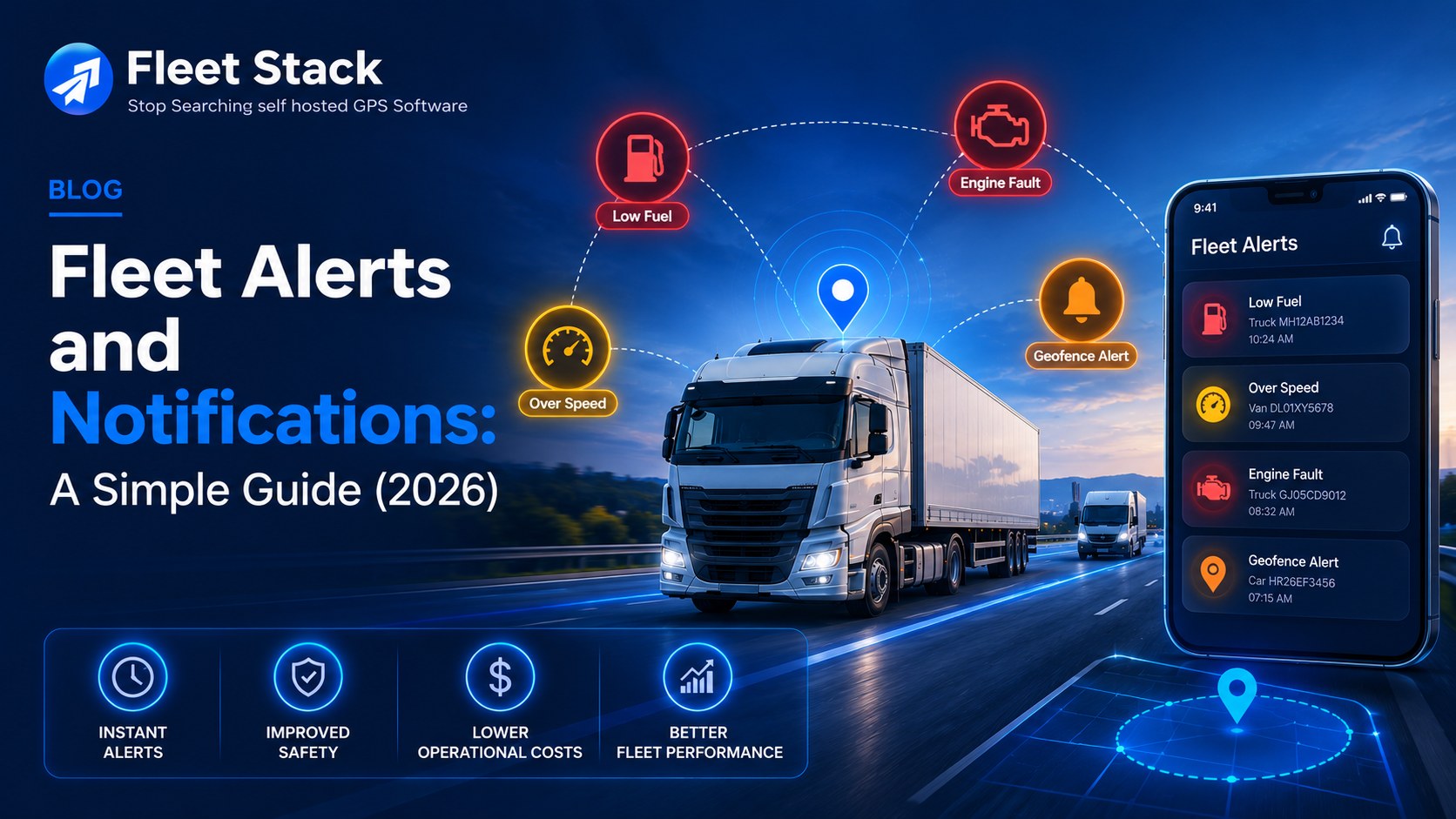
How does Fleet Alerts work?
Fleet alert notifications are notifications that appear in real time to you that a vehicle or driver has performed an action that is significant to you. You don't have to watch a screen 24/7, you set the rules and the system tells you when the rules are broken. Typical alerts include speeding, hard braking, exiting from a set zone, engine trouble and fuel lowing and travelling outside of hours. Alerts are sent to the right person via push, SMS, email or a flag on a dashboard, sometimes in seconds, when an event occurs. This is the making fleet management from seeing to doing. You are not on a map and you are not going to take any action until you are told to do so. A good alert system will also prioritise the alerts – an SOS will be sent to the manager, a less severe overspeed will be logged and recorded to be discussed at a coaching session later. When fleets act on the alerts in a timely manner, they get ahead of the problems, help lower their fuel consumption costs, improve safety, and solve problems in minutes, not days.
Last updated: June 2026.
Key takeaways
- Fleet alerts are instant notifications that are generated when a rule is violated.
- Common ones are speeding, harsh driving behaviour, geofence, fuel, engine and after hours.
- Alerts are delivered via push, SMS, email or the dashboard, and are communicated to the right individual in seconds.
- Alert fatigue is the primary risk so only send each alert to the appropriate person.
What is a Fleet Alert?
The idea is simple. You establish a rule and the system continually monitors it 24/7.
- You set a rule. Any car speeding (over 80 km/h) will be alerted to me.
- The system watches. Seeks up-to-date GPS and vehicle information and then matches them to your rules
- An alert is triggered by an event. If the rule is not followed, an alert is raised.
- Reaches the right person. Also push, SMS or email, or flag on dashboard.
This makes use of your real-time GPS tracking and car information. All of its capabilities are included on the alert center page.
Is there a variety of different fleet alerts?
The majority of sites organize alerts by the types of content that they view. Some of the most prevalent types include:
The Alert types and what they catch and why they matter:
| Alert type | What it catches | Why it matters |
| Excessive speeding | Vehicle speeds higher than specified | Reduces crash risk and fuel consumption |
| Aggressive driving | Ruddy driving and cornering too quickly | Makes it clear to aggressive drivers early tags |
| Geofence | Someone enters or leaves a zone | Detects theft and route changes |
| After hours movement | A vehicle used outside of hours | Stops unauthorised use and theft |
| Theft/fuel leak indicator | Shows a rapid drop in fuel | — |
| Engine or health | Fault codes and warnings | Prevents breakdowns |
| Idle time | Extended idling (engine running) | Saves lost fuel |
| SOS or panic | Driver presses the panic button | Triggers an urgent response |
| Tamper | Tracker unplugged or signal blocked | — |
Location and Geofence Alerts
These light up when somebody comes and goes, or wanders off, from a zone that you created. These form the backbone of theft protection and route control. They are directly related to geofencing zones to which you can draw zones.
Driver Behaviour Alerts
All speeds, hard braking and hard cornering are alerted by and can be corrected. These all feed into a driver's score over time to be correlated to driver management.
Fuel and Engine Alerts.
Sudden drop in fuel is a theft/leak warning. Fuel theft alerts are usually set for a 15-20 litre loss in fuel, when the ignition is off, and the dispatcher is alerted. That "pattern" is often not innocent and the fleet can investigate a stolen engine in minutes, rather than days through a report. Engine fault codes are important clues to potential breakdowns. Fuel alerts are related to the big picture-fuel management.
The Biggest Risk: Alert Fatigue
This is the part most guides overlook and it determines the difference between alerts being helpful and harmful.
When you have a big fleet, you're creating thousands of alerts per week. So they end up reading none of them when they all end up at their place. This is referred to as "alert fatigue", and is the number one reason for alert system failures. If a system isn't set up correctly, it may generate alerts that need no action from a dispatch team. Once the critical alert is issued there's too much background noise.
The answer is simple: Communicate all of the alerts by priority and to the right people. The manager is informed of an SOS first. If the geofence is violated, it is reported to the dispatcher. A little overspeed is just noted for further discussion with the coach. Assign a level of severity (critical, warning, minor, info) to each alert and correlate the channel with the level of severity. The critical alerts are sent by call or SMS. Minor ones receive silent log.
Some newer systems go even further. AI routing will deliver fewer and more relevant alerts – a traditional rule-based approach would generate alerts about low value and irrelevant incidents for your team. When properly implemented, people take heed and act on the warnings.
Setting up Fleet Alerts Well Done
With a few simple practices, alerts work.
- Begin with small number of critical few. Theft, SOS and also major overspeed initial. Add more later.
- Establish appropriate thresholds. Never have a loaded truck and a small van share one speed rule.
- Route by role. Safety alerts are sent to the Safety leads. Notification to dispatchers of arrival. Mechanics are notified of health concerns.
- Use severity levels. Each channel a critical, high and medium, and info.
- Review and tune. If an alert is continuously going off and there is no response, then adjust the rule.
The intent isn't to wake up more of you, it's to wake you up differently. It's the proper alert, to the proper person, at the proper time.
Fleet Alerts vs Fleet Monitoring
These words are used interchangeably by some. They do not. The difference is here.
| Track the fleet | Alerts to fleet |
| Manual watching | Automatic |
| Continuous screen time | Notify only on events |
| Reactive | Proactive |
| Time consuming | Exception based |
Monitoring involves someone viewing a real-time map and looking out for issues. That's what alerts do. The system waits for you, and only allows it to say something when a rule is violated. For a fleet of any size, the only way to keep an eye on all vehicles is by using alerts.
So, when you're searching for fleet alert software, what are the things you need to keep in mind?
These features will be what you will want to see when comparing tools.
- Custom rules – so you can establish thresholds by vehicle, zone and driver.
- Push, SMS, e-mail and dashboard.
- The mobile application will make sure that alerts are received at any time and place.
- Escalation: If a critical is not handled it will be passed to the next person.
- API access, to connect alerts to your other systems.
- Machine learning prioritisation to reduce false alerts and bring top priority alerts to the forefront.
- Alert history – All alerts are recorded for review and audits.
- To have a white label, and operate the system under your brand.
- Allows for self-hosted version which means that it can be run on your own server and you own the data.
Use custom rules and good routing to begin. How much trust is lost or gained in the whole system relies on those two.
So what are the benefits of a fleet alert?
Alerts convert data to actionable information. Here's the benefits fleets achieve.
| Benefit | How alerts help |
| Enhance safety | Detect speeding and driving poorly in timely fashion |
| Reduce theft | After-hours and Geofence alerts trigger immediately |
| Prevent fuel wastage | Idle/fuel drop alerts prevent this |
| Less breakdowns | Engine alerts warn before a failure |
| Strike quickly | Act in minutes not days |
| Decrease screen time | Set screen time boundaries, and only when you see exceptions |
Time is the one best thing about it. You're not looking at a map the whole day, you're listening to the system tell you to do so. This is called managing by exception and is the approach taken by large fleets to track hundreds of vehicles.
Example: School Bus Safety
This is a typical usage of alerts. It is a representation and not a customer.
Suppose a school transport company were to drive 120+ buses with students in each morning. For the operations team there is a way to set up alerts for overspeeding, route deviation, SOS events instead of having to be constantly on a tracking dashboard.
If a bus goes over the speed limit or leaves its assigned route, the system sends an instant alert to the transport manager. The manager has the ability to call the driver immediately, before a small problem becomes a safety risk.
Its significance: Parents want to see safe transport; real-time alerts will allow the school to respond in real time, not after the event. It is a very effective way of managing by exception and can prevent a big incident from happening with one alert.
Who should be receiving Fleet Alerts?
Alerts can be helpful for any fleet but particularly for:
- Large fleets in which it is not feasible to track each vehicle individually.
- Notification when items are delivered or arrive at a different location, theft alert, and route alerts.
- Trucking is fast, tiring and damaging to engines.
- School and Passanger Transport Safety Alerts for overspeed, route and SOS.
- If speed of response is possible, for any fleet with high value goods or assets, the loss is avoidable.
Frequently Asked Questions
So, what is fleet alerts?
Fleet alerts are notifications that are automatically issued when a rule has been breached (such as speed, geofence, fuel drop, after hours etc.). They connect to the right person via push, SMS, email or the dashboard.
What types of fleet alerts are there?These can be an excessive speed, aggressive driving, geofence entry/exit, after hours activity, fuel anomaly, engine or health fault, idle time, SOS or tampering with the device.
How can I be alerted to fleet?
Typically within seconds of the event, via push notification, SMS or email or via a flag on the dashboard. An effective system will provide the choice of the chosen channel, based on the seriousness of the alert.
What does mean alert fatigue?Alert Fatigue occurs when there are too many alerts being sent to too many people - causing them to ignore them. The solution is to send each alert by importance to the appropriate person, so that the important alerts are not missed.
Is it possible to set up fleet alert rules?Yes. With good systems, thresholds can be set by vehicle type, zone and driver and each alert can be directed to an individual or group of individuals.
Do Fleet Alerts work as an inhibitor to theft?Yes. After Hours Movement and Geofence Alerts activate as soon as a vehicle is moving at an inappropriate time, allowing you to respond immediately, and not the next morning.
Between fleet alerts and fleet monitoring, what is the difference?
Monitoring: Person who watches a real map all day long. Alerts are exception and automatic – monitors you, you don't monitor, so you don't react, you act.
The Bottom Line
Fleet alerts turn fleet management from a reactive to a proactive approach. It's rules are defined by you, and when there's something that needs attention, it'll pop up in the push window, or send you an SMS or email, or show up in the dashboard.
The results have been demonstrated to be true: improvements in safety, less theft, reduced fuel costs and fewer breakdowns. The one thing to get right is routing. Delegate by priority – your team will follow and believe the alerts that are sent to them. If programmed correctly, alerts can be the difference between maintaining a large fleet with a limited manpower.
Looking to be alerted to the right person at the right time, right place? Rules can be set, as well as the severity and outlets for each event in FleetStack alert center. It is deployed using the same platform as your tracking, fuel and driver apps, and can even be installed on your own server, and you can start your trial free of charge!
While some models are more effective than others, GPS fleet tracking systems are the ones that have proven to be the most successful.
Industry alert feature sets 2026 (alert types, channels, severity routing, alert fatigue, as the number one reason for failure). 2026 fleet alert and notification industry data (speeding, idling, geofence, harsh driving, after hours). Figures and features are dependent on platform, fleet and set-up.
0 Comments
No comments yet. Be the first to comment!
Please to post a comment