
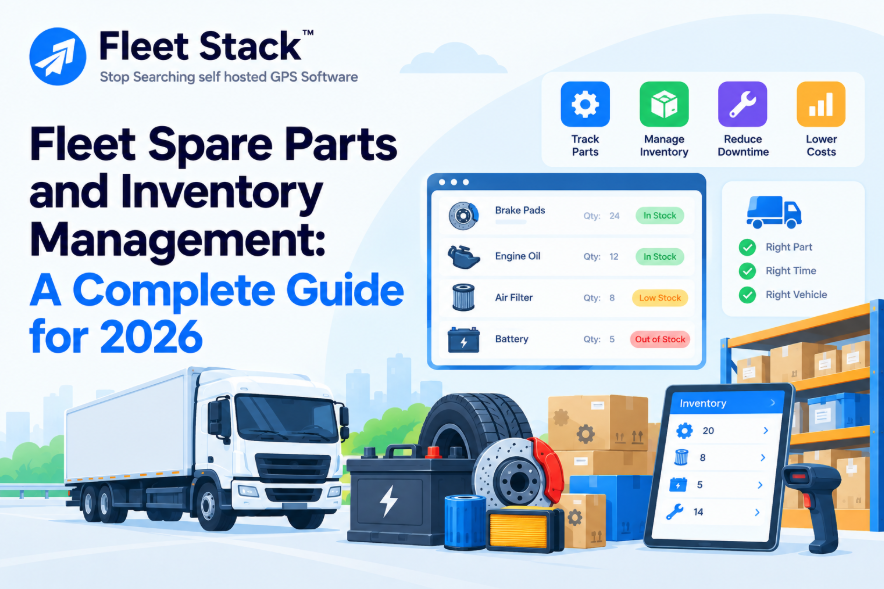
A fleet spare parts and inventory management software system monitors the parts that a fleet has and is using and when a vehicle needs to be repaired, they can get it done faster without having to keep extra funds tied in overstock. It documents the parts that are in stock, the parts used on a vehicle, when parts are running low and the cost of parts per vehicle. The aim is to optimise against two mutually conflicting issues: having too little stock will result in delays in repair which will keep vehicles off the road, having too much will result in a loss of funds. Good parts management involves availability of right parts, fast repairs and visibility and control of parts inventory.
At a Glance
| Question | Quick Answer |
| So what is spare parts inventory management? | Monitoring what's on the truck and on the job to manage cost and uptime. |
| What is the problem that it addresses? | Having too few stocks is a postponement of repairs, having too many stocks is a money waster |
| What does it track? | In Stock, Parts Per Vehicle, Reorder Point and Part Cost |
| How does it help to increase uptime? | Right parts are available, no delays for repair waiting for parts. |
| In what way does it save money? | Free-up excess inventory and part cost per vehicle |
| Who needs it? | Fleets that service vehicles in-house and have a parts store. |
Parts inventory is essential for fleets because it is a vital part of their daily operations.
A vehicle awaiting a component is a vehicle that is not a earning vehicle. If the part isn't available, the repair must wait until the part is ordered and arrives — lost revenue and schedules. Obviously, if you are storing a lot of all these components, you will run into the other problem – having too much capital locked up in a warehouse with a lot of parts that might be needed over the course of months, plus storage costs and risk of parts going out of fashion.
The aim of parts inventory management is to strike a balance between these. It maintains sufficient inventories of items that you use, but not too many of items that you don't. This directly impacts the uptime and cost of vehicles maintained in-house, making it a part of any fleet's efforts toward keeping vehicles on the road affordably, along with maintenance scheduling.
What does Spare Parts Inventory Software track?
A parts inventory system controls the fleet's store as a controlled, visible stock, rather than a shelf that a person has to look at. The essential elements it monitors:
- Parts in stock. What is in the fleet, how much and where, stock is known and not assumed.
- Usage per vehicle. Parts were installed in which vehicle and for which repair, so use is associated with the vehicle and repair history.
- Reorder points. The level at which a part needs to be ordered to prevent outages.
- Part cost. Cost of parts, and the parts cost per vehicle over time, so you can visually determine which vehicles spend the most on parts.
- Suppliers and orders. Stock is managed along with the parts, and where they are coming from and what is on order is managed.
This is the way to track parts and make it a manageable inventory, knowing what you have, what you use and what it costs.
It enhances uptime and manages costs.
The result is an immediate uptime improvement. If the parts are always in stock that your fleet uses often, then the repair can begin right away, without the wait for an order to show up. Reorder points are those that, when reached, cause reordering so that stock levels are maintained for the repairs that you are likely to make. This leads to reduced downtime waiting for parts, resulting in more cars continuing to earn.
The relationship of cost control is two-way. Maintaining an adequate level of stock inventory, but not overstocking it, allows the capital that would otherwise be tied up in idle inventory to be better used elsewhere, and reduces waste from the disposal of parts that are deemed to be obsolete or coming to the end of their useful life. Meanwhile, a reference of parts cost per vehicle provides a useful clue as to where the money is going, and a vehicle with a high amount of unusual parts usage can be investigated, it could be due to age, usage or another recurring fault. This analysis is possible if parts usage is linked to the maintenance history.
When choosing parts inventory software, you should consider the following features.
When looking at this feature, ensure that it has a proper management system for stock and is linked to maintenance:
- Tracking stocks in quantities and locations, thus always knowing the inventory.
- Usage recording by vehicle based on repair and maintenance.
- Arrange points and low stock alerts to ensure you restock before getting out of stock.
- Reporting of part cost and cost/vehicle, allowing parts spend to be seen.
- Supplier and Purchase Order Management as well – supply side is managed too.
- Integration with maintenance, so parts are drawn down as repairs are logged not separately.
FAQs
Fleet spare parts inventory management is what?
It is a software that monitors the parts that a fleet is keeping and using such as what is in stock, what parts are installed in which vehicle, when to order the parts, and what they cost. It provides a fleet with the correct parts on hand for rapid repairs, while minimizing the cost of carrying too many parts in inventory, weighing up vehicle uptime vs. inventory cost.
Why do fleets need parts inventory management?
The fact that a car waits for a part that is not in stock makes it idle and therefore not earning, while having too many parts in stock costs capital and storage. Parts management is a balance between these and maintains sufficient levels of the parts you do use to meet the requirements of swift repairs, but avoids overstocking the parts you don't use. It has a direct impact on both uptime and cost.
What is being monitored by the parts inventory software?
In stock parts, quantities, locations, usage per vehicle, reorder points for reordering, part cost, parts cost per vehicle, suppliers and purchase orders. This converts an informal store to a managed inventory with known inventory, and known usage and costs.
What are the benefits of parts management on vehicle uptime?
A fleet that frequently uses specific parts can have those parts on hand and start the repair process without delay instead of having to wait for an order to be placed, thus keeping vehicles on the road. Reorder points keep those parts in store, allowing the store to remain full for the repairs that are actually made on the fleet.
How does inventory of parts affect cost?
It releases capital by stocking the correct amount of parts rather than overstocking, and wastes are minimized because parts are not allowed to expire or become obsolete. It also monitors part cost per vehicle, meaning that vehicles that spend more than the norm on parts will become apparent and can be investigated based on the parts used, how much they cost, or if they are a common fault.
Should parts inventory be included in fleet software?
It's best when it's . . . Parts is integrated with maintenance within a fleet system so that when maintenance is recorded, parts are recorded as well, usage is tied to the vehicle history, and parts cost is part of your cost reporting—all without having to use a separate spreadsheet.
Spare Parts Management With Fleet Stack
Fleet Stack is a self-hosted GPS tracking and fleet ERP system with spare parts and stock management and maintenance scheduling, which means parts stock, usage and cost are taken care of in the same system that schedules maintenance. Since it's self-hosted, your operational and cost information remain on infrastructure you own. Parts inventory is a controllable fleet cost, and can be managed alongside of the strategies in the fuel and maintenance guides. To see the full fleet picture, have a look at the ultimate guide to fleet management software.
0 Comments
No comments yet. Be the first to comment!
Please to post a comment