
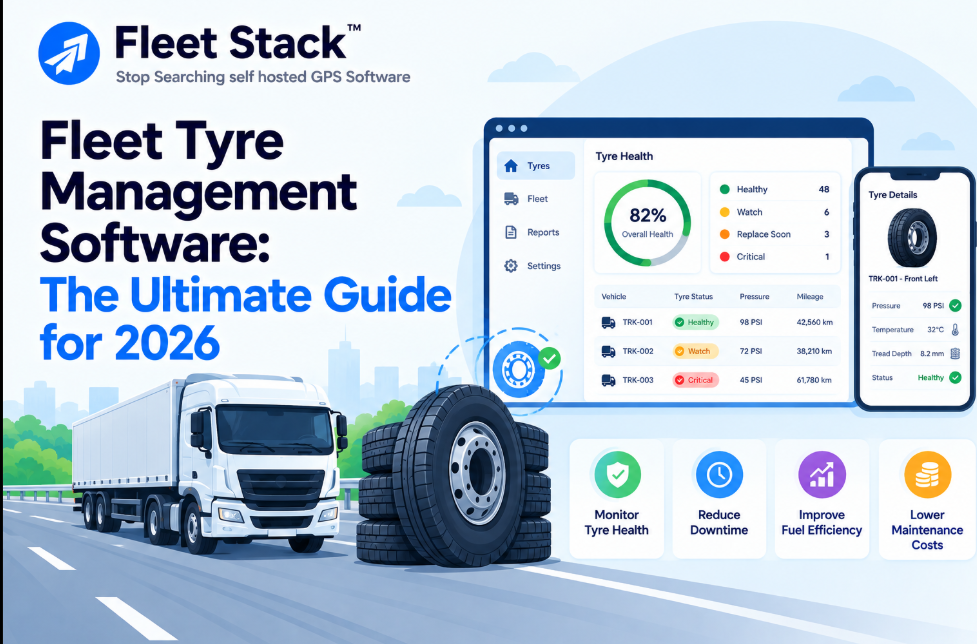
Fleet tyre management software can monitor the entire lifecycle of each tyre on a fleet, from purchase to fitment, rotation, retreading to disposal, ensuring operators can have a handle on one of their biggest running costs. It keeps track of which tyre is being used on which car, keeps an eye on tyre pressure and tread wear, schedules tyre rotations, manages tyre retreading and calculates the cost per kilometre to help you compare the brands and catch issues early. Tyres represent a significant and ongoing cost for a fleet as well as a safety factor – being able to do this in a systematic and planned manner will not only save money but also cut down on breakdowns and accidents.
At a Glance
| Question | Quick Answer |
| So, what exactly is fleet tyre management? | Monitoring the life of all tyres throughout the fleet, controlling costs and safety. |
| Why does it matter? | Tyres are one of the biggest fleet running costs, behind fuel. |
| What is the software monitoring? | The Tyre Inventory, position on a vehicle, pressure, tread wear, rotation, rethreading and cost per km. |
| In what way is it a cost saving measure? | Extend tyre life, reduce break downs, and information to select optimal tyres. |
| Does it enhance safety? | Yes, that's right, by letting you know if they are under inflated or if the tread is worn out, before they cause failure. |
| Who needs it? | Any fleet size where tyre spend and tyre failure becomes an issue. |
The Advantages of Purchasing the Right Tyres is a price worth handling.
In most fleets the expense of tyres is one of the highest running costs - other than fuel - and, unlike many running costs, can be influenced directly by how well they are managed. Running tyres under-inflated will cause the fuel consumption to rise and the tyres to wear quicker. If not rotated a tyre wears unevenly and will need to be replaced before it should. Money is being thrown away if a tyre can be retreaded but is scrapped. Also, if a tyre is worn, or under inflated, it is not a safe tyre to drive on at speed and cannot be repaired.
Managed reactively, tyres continuously consume resources, and periodically become a roadside crisis. With systematic handling, tyres last longer, failures are reduced and the data is available to purchase better tyres. Tyre management software is for this. Along with the other major controllable cost (which is discussed in the fleet fuel management guide) it is one of two areas where good management has the greatest direct impact on reducing spend.
The Fleet Tyre Management Software keeps track of all of the following:
A tyre management system keeps track of each tyre as an individual asset rather than a line on a vehicle. The principle things it monitors:
- The number of tyres in store and their location. Where is each tyre mounted on each car/bike, and which tyres are available in the store, so that every tyre is counted.
- Pressure. Correct inflation as under-inflation causes increased wear and fuel consumption and increases the risk of failure. There are systems available that can be integrated with pressure monitoring systems.
- Tread wear. Tyres are changed based on what level they're worn down to and not based on a guess and tyres are captured before they become unsafe.
- Rotation scheduling. How and when to rotate tyres to maximize life and even wear.
- Retreading. What tyres can be retreaded, saving the value that is lost when they are replaced.
- Cost per kilometre. The true life cost of each tyre that allows you to truly compare brands and models based on performance and not purchase price.
In this way you can measure the cost of tyres and take action based on the data.
The benefits of how it saves money and improves safety.
There are multiple savings to consider. The correct pressure and timely rotation of tyres ensures their longevity, which means you need to purchase less tyres. The condition-based replacement program helps prevent early replacement of tyres and long periods of road life. Value is captured by retreading the suitable tyres. And cost per kilometre information (cpk) helps you avoid purchasing tyres that are low upfront but high cost, and instead purchase the ones that are cheaper over their lifespan.
The safety side augments the savings. Tyre failure, mainly caused by under-inflation and excessive wear and tear, is one of the most common causes of failures on a commercial vehicle that is loaded at operating speed. The driver, the vehicle and the load are protected and the cost and downtime of a blowout are avoided. Y tyre data and driver-behaviour monitoring is a perfect fit when it comes to driving style and tyre wear.
When choosing tyre management software, there are a number of features to consider:
As you consider this feature, make sure that it integrates tracked tyres and is a good fit for your fleet:
- All tyres are tracked individually over their lifetime and across vehicles (per-tyre, per-position tracking).
- Pressure and tread recording, preferably with the capacity to mark out-of-range pressure and tread readings.
- Rotation and retreading management to make sure that you are able to maximise the life of your tyres and you are getting retread value.
- Reporting in c/p-km, to compare tyre brands in terms of their actual performance.
- Integration with maintenance—tyre work is included with the rest of your maintenance scheduling.
- Integrated into a larger fleet platform, tyre data is included with your tracking, fuel and cost reporting, not in a spreadsheet.
FAQs
Fleet tyre management software is a program designed to track and manage a fleet's tyres.
It is software which monitors each tyre in a fleet as a distinct asset from purchase to fitment, rotation, retreading and disposal. It keeps track of tyre position, pressure, tread wear and cost per kilometre and plans rotations, allowing operators to manage tyre costs and detect unsafe tyres before they fail.
Why is Tyre Management important for fleets?
Tyres are one of the biggest running costs of a fleet besides fuel, and that's something that can directly impact on the cost and safety of the fleet. Proper tyre inflation is essential for better life and conserves money – under inflated tyres and missed rotations reduce the life and wasted money, and worn or under inflated tyres are among the top causes of unsafe tyre failures. Systematic management is for reducing failures and cost.
What information does the tyres management software monitor?
Tyre inventory and position (which tyre is on which wheel of which vehicle), tyre pressure, tread wear, tyre rotation schedules, tyre retreading candidates and tyre cost per kilometre over the life of the tyre. This transforms tyres from an uncertain, "recurring cost" to measurable data that can be acted upon.
In what way does tyre management save money?
Correct pressure and rotation - by extending tyre life through correct tyre pressure and rotation of tyres in accordance with their usage and wear, we are not buying them too early or too late.Tyres bought on condition, not too early and not too late - tyres are being replaced when they are in need, not before or after, and value captured by retreading - tyres being retreaded provide value, they are not being thrown away.
Are tyre management efficient for fleet safety?
Yes. Worn tread can be a major cause of tyre failure and under-inflation is also a potential danger in high load, high speed commercial tires. These conditions are flagged by the tyre and avoid a tyre blowout, meaning the driver, vehicle and cargo are all protected from failure and downtimes caused by tyre blowout.
How much does it cost to run tyres per kilometre?
It is the actual cost of a tyre, over its entire life divided by the distance it will cover, not the price of the tyre. Cost per kilometre is a useful metric for a fleet to know when comparing tyre brands and models for performance, as this gives the fleet an indication of the lowest cost of the tyre, and not the lowest price.
To what extent should tyre management be included in fleet software?
It's most helpful when it's. When tyre tracking is integrated with the rest of the platform – maintenance, fuel and cost reporting – rather than kept in a separate spreadsheet, and tyre activity is included with the rest of your maintenance activities, then tyre work is scheduled in with the rest of your maintenance.
Demonstrating how to manage your fleet's tyres using Fleet Stack.
Fleet Stack is a fully hosted GPS tracking and fleet ERP system, which comes with tyre management capabilities as well as maintenance, fuel and cost tracking, as a result tyres are managed in the same system as all your other tracked assets. As it's self-hosted, your operational data remains on infrastructure you control. Tyres and fuel are the two biggest controllable fleet costs, so that's what is being addressed by combining fleet tyre management with the approach taken in the fuel management guide. For planning pressure sensors hardware, refer to the list of supported devices.
0 Comments
No comments yet. Be the first to comment!
Please to post a comment